
A 25 m3 stainless steel vacuum tank container is a large vacuum-recovery and cleaning module built on a 40 ft frame. It can be mounted as part of a semi-trailer or another approved carrier arrangement where the operator needs a high-capacity vacuum tank, an independent power unit and a high-pressure cleaning system in one package.
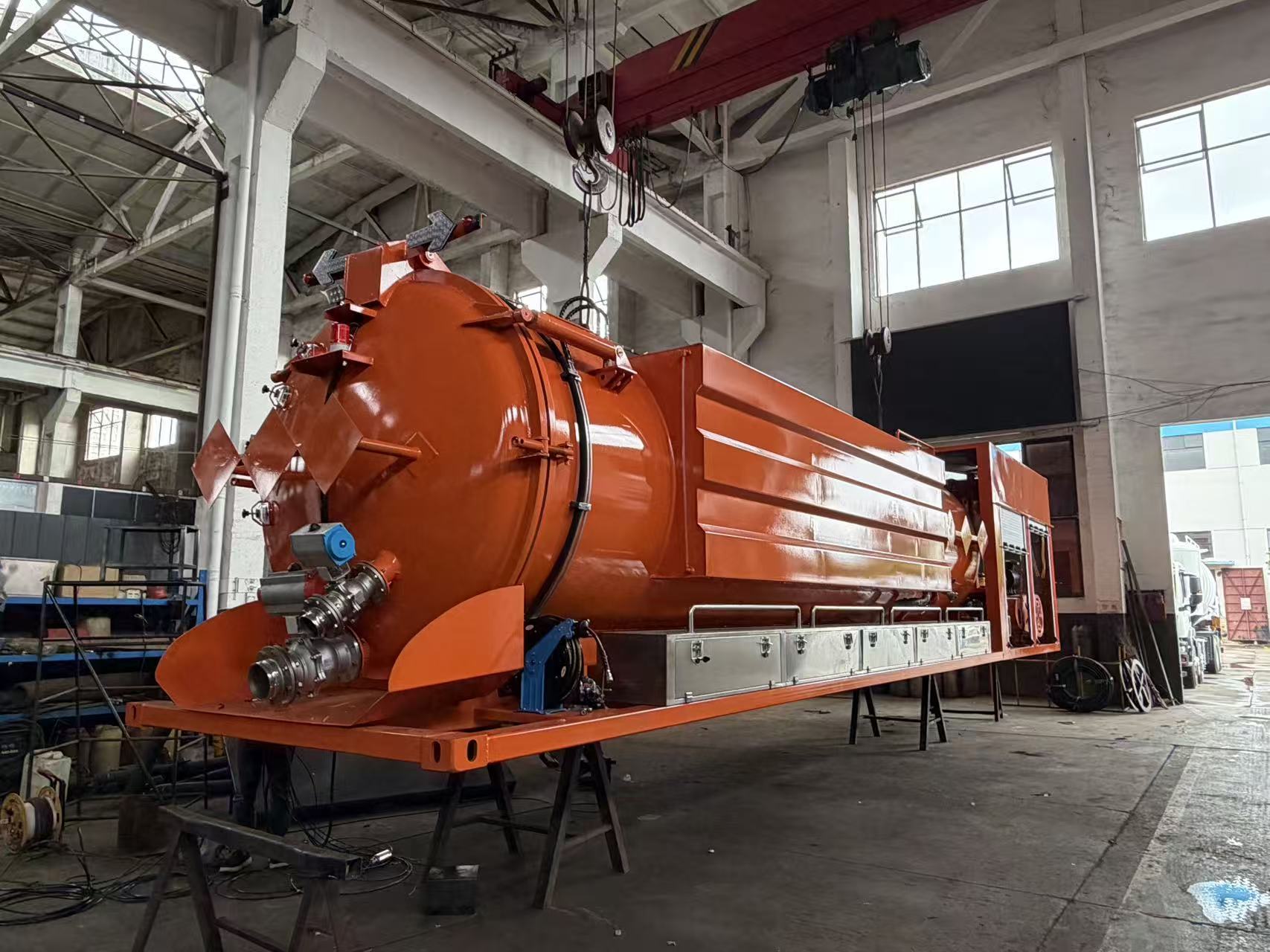
The orange equipment shown in the supplied workshop photos is the tank-container superstructure itself. It is not presented here as a complete road vehicle, because the photos do not show its final tractor, trailer or carrier configuration. This guide covers the documented superstructure and equipment layout only.
This is a reference configuration, not a fixed offer for every project. The final carrier arrangement, transport approvals, tank grade, working medium, hose lengths and destination-market requirements must be confirmed before manufacture.
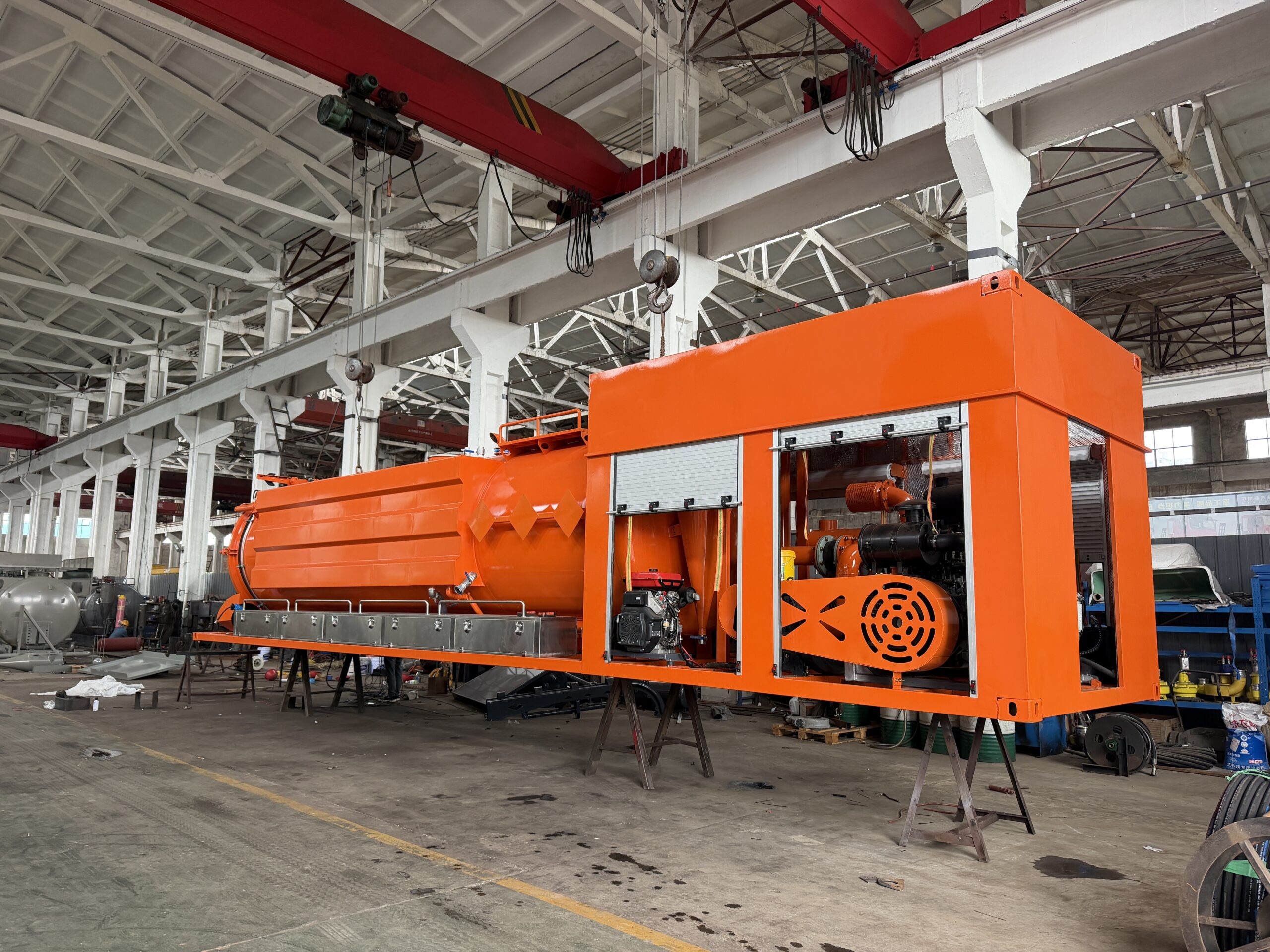
Documented 25 m3 vacuum tank-container configuration
| Item | Reference configuration |
|---|---|
| Frame | 40 ft tank-container frame |
| Wastewater tank | 25 m3 cylindrical tank body |
| Clean-water tank arrangement | 4 m3 arrangement positioned along both sides of the wastewater tank |
| Tank body material | Stainless steel, confirmed for this configuration |
| Documented stainless components | 316 stainless tank flanges; 304 stainless pipework and related flanges |
| Tank-wall reference | 8 mm |
| Design pressure reference | Positive 0.05 bar; negative -1 bar |
| Tank reinforcement | Internal anti-surge baffles and external reinforcement rings |
| Rear cover | Mechanical side opening with wheel-type manual locking |
| Top access | Two top loading/unloading ports |
| Maximum rear-cover opening | 60 degrees |
| Suction connection | DN100 European-standard stainless steel connection |
| Discharge connection | DN150 European-standard stainless steel connection |
The material specification is important, but it should not be reduced to a single line in a quotation. The supplied reference identifies stainless steel for the tank body, 316 stainless tank flanges and 304 stainless pipework and related flanges. Buyers handling corrosive, saline or otherwise aggressive media should still confirm the final material grades, seals, valves and internal protection in the approved drawing for their exact working medium.
Why use a 40 ft tank-container layout?
The documented 40 ft frame makes this configuration different from an ordinary truck-mounted vacuum body. The module can be planned around its carrier arrangement, project transport method and local approval requirements instead of treating the tank body as permanently tied to one cab-and-chassis layout.
For a buyer, the practical question is not only whether 25 m3 is the desired wastewater capacity. It is whether the carrier, axle loading, trailer arrangement, road access and disposal cycle can support that capacity in the destination market. A large vacuum tank can reduce emptying trips, but it also needs a suitable transport arrangement and job-site plan.
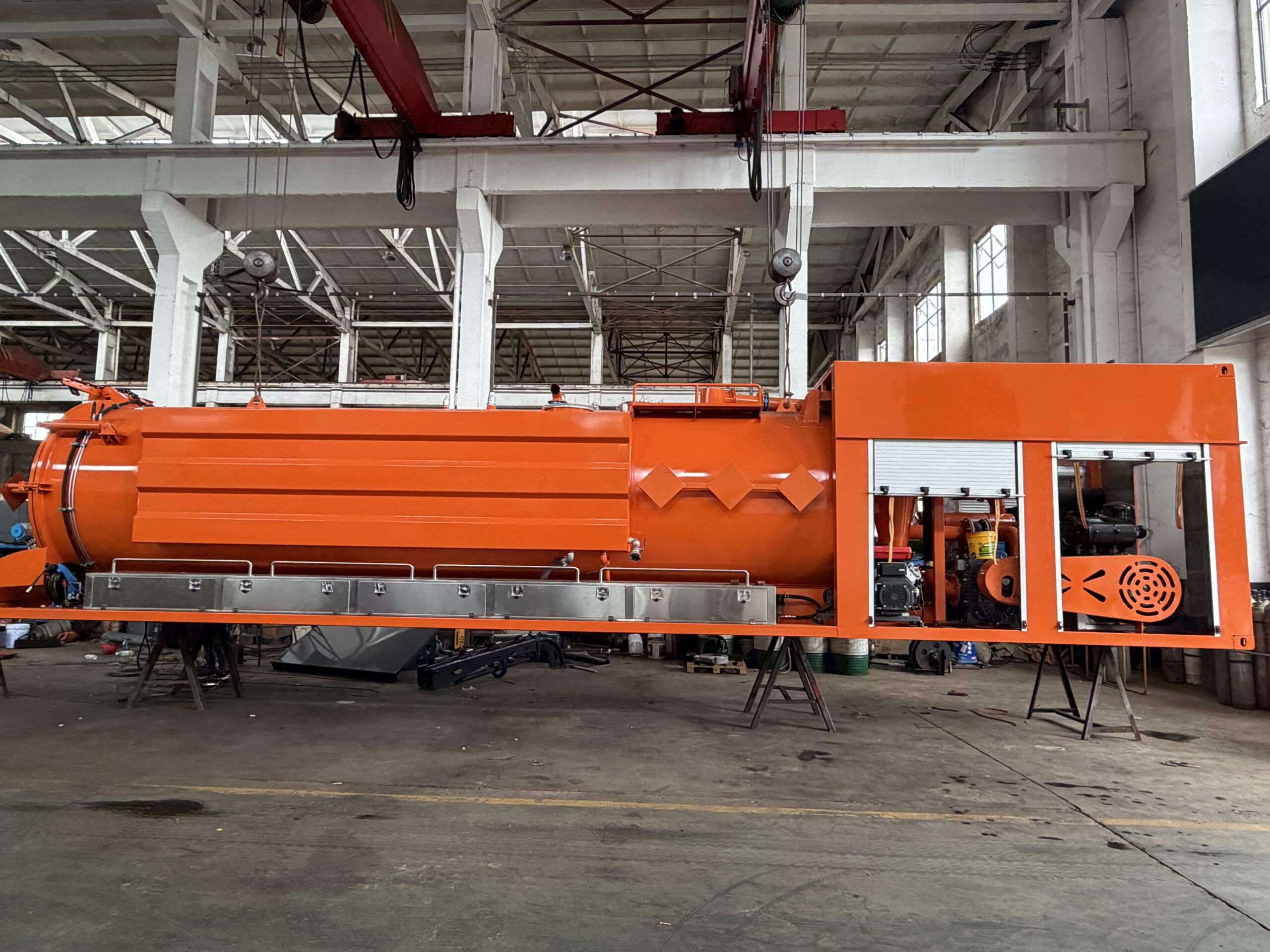
Vacuum-recovery system: Jurop PVT700 reference package
The supplied configuration uses an Italian Jurop PVT700 vacuum pump. It is driven by a dedicated Cummins QSB6.7-C260-30 auxiliary engine rather than relying only on a truck PTO. The documented reference values are:
| Vacuum system item | Documented reference |
|---|---|
| Vacuum pump | Jurop PVT700 |
| Stated airflow | 4,150 m3/h (2,445 cfm) |
| Specified speed | 2,500 rpm |
| Stated vacuum level | 93% (28.0 in Hg) |
| Listed power at maximum absolute pressure | 112 kW (151 hp) |
| Pump weight | 640 kg |
| Auxiliary engine | Cummins QSB6.7-C260-30 |
| Auxiliary-engine maximum power | 194 kW |
| Auxiliary-engine maximum torque | 990 N.m |
The vacuum system is documented with an over-pressure relief valve, a negative-pressure overflow valve set at -80 kPa, a metal filter and four visible liquid-level indicators. It also includes a secondary cyclone-type anti-overflow arrangement. These protection and monitoring components deserve as much attention as the stated airflow, especially where the collected material may contain liquid, foam or debris.
Actual vacuum performance depends on the working medium, hose diameter, hose routing, lift, tank level, filter condition, altitude and maintenance. The stated airflow and vacuum level are reference values for this supplied package, not a guarantee of performance for every job site.
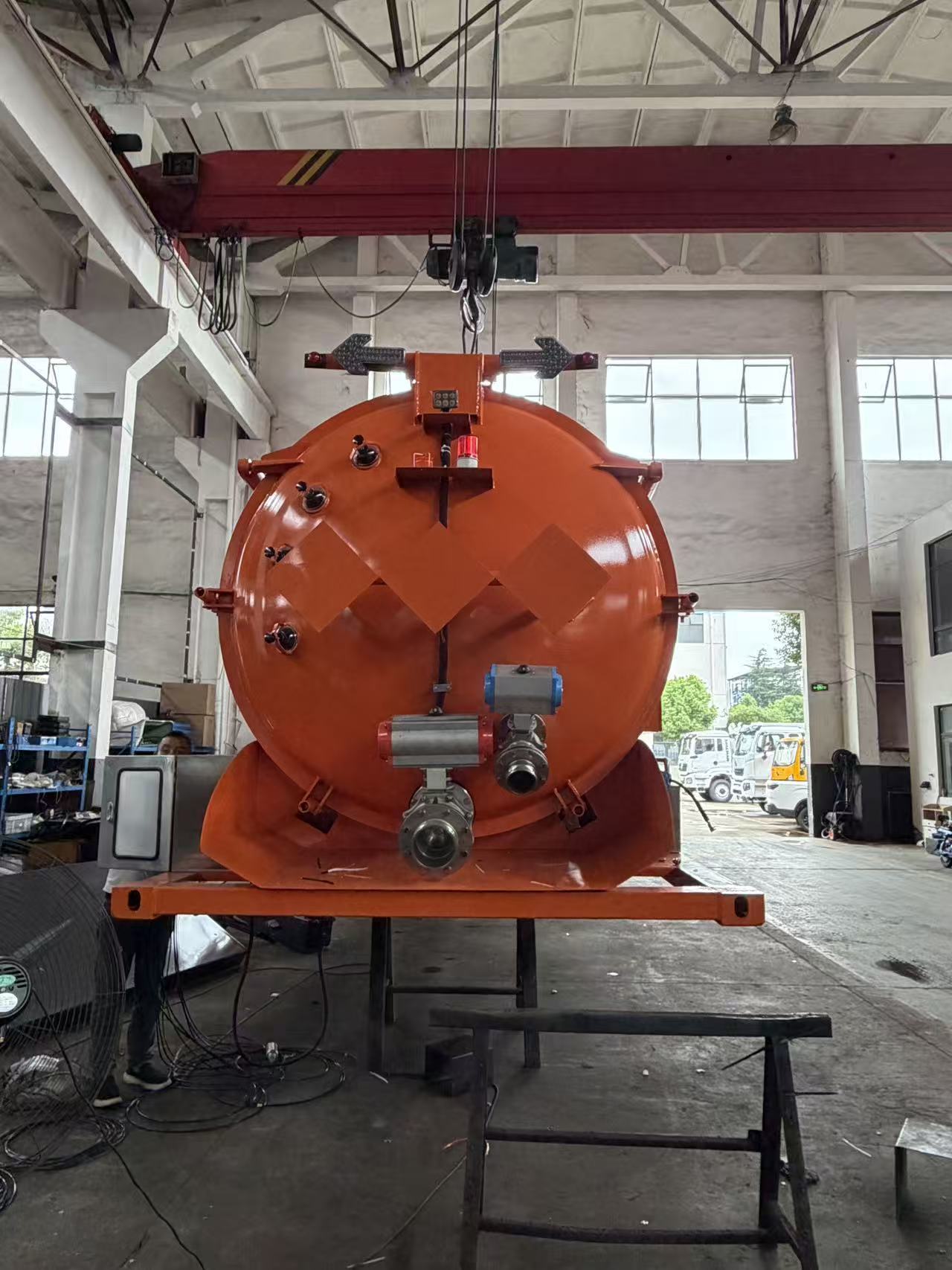
High-pressure cleaning system: AR50.15 reference package
The same tank container also includes a dedicated high-pressure cleaning system. The supplied document specifies an Italian Annovi Reverberi AR50.15 N high-pressure pump with a separate diesel engine package.
| High-pressure system item | Documented reference |
|---|---|
| High-pressure pump | Annovi Reverberi AR50.15 N |
| Flow | 50 L/min |
| Rated pressure | 150 bar / 15 MPa |
| Pump speed | 1,450 rpm |
| Engine | Hailong (Wuxi) 2V95 diesel engine |
| Engine power | 19 kW |
| Automatic pipe-laying arrangement | 15 m reference |
| Adjustable high-pressure spray gun | 0-45 degree range |
This jetting package should be sized around the actual pipe condition and required cleaning distance. A buyer should confirm the required nozzle type, hose diameter, hose length, reel arrangement and any cold-weather or safety requirements before production. A high-pressure rating alone does not show whether the truck will be effective on a particular blockage or pipe network.
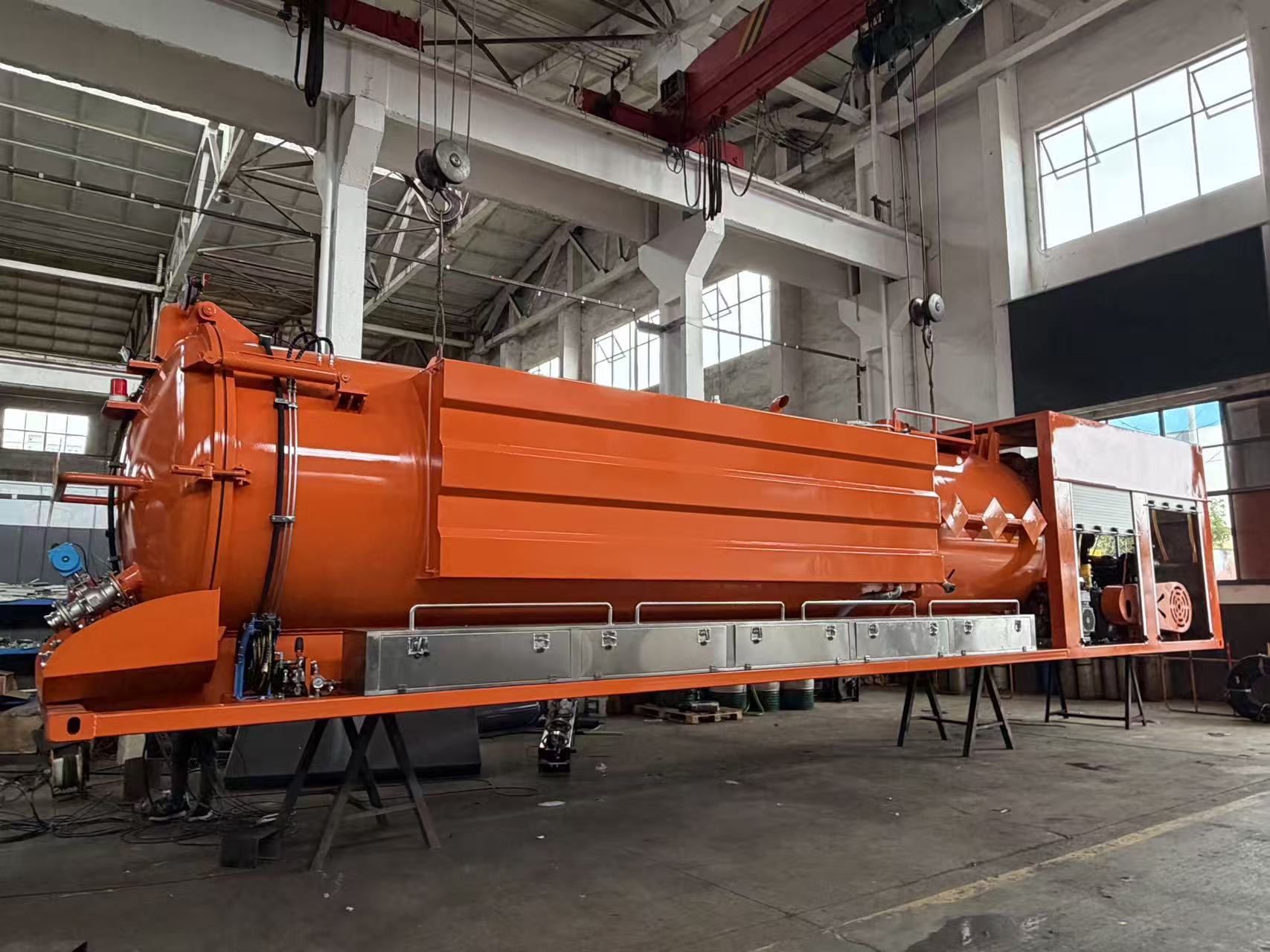
Rear-door, connection and hose arrangement
The tank body is documented with a mechanically side-opening rear cover and wheel-type manual locking. The maximum opening angle is listed as 60 degrees. The layout includes two top loading/unloading ports, a DN100 stainless suction connection and a DN150 stainless discharge connection.
The supplied package also lists three 8 m DN100 suction hoses and one 5 m DN150 gravity-discharge hose. These are useful starting points for a quotation, but they must be checked against the required work radius, access limitations, solids content and local handling practices.
The workshop images make the rear cover, connections, side toolboxes and equipment enclosure easy to inspect before the module is installed on its final carrier. They are evidence of the physical configuration shown, not proof of a completed road-legal vehicle.
What to confirm before ordering a 25 m3 vacuum tank container
Before confirming a similar stainless steel tank container, provide the following information:
- The material to be recovered, including corrosiveness, solids content, temperature and whether it contains foam, oil or abrasive matter
- Required wastewater capacity and clean-water demand per shift
- Final carrier or trailer arrangement, axle-load limits, road access and transport approvals
- Required suction distance, vertical lift, discharge arrangement and hose handling method
- Pipe-cleaning application, required flow and pressure, expected pipe diameter and nozzle requirement
- Destination market, climate, electrical preference, engine-emissions requirement and service support needs
- Required stainless grades, valve and seal materials, coatings and inspection documentation
This lets the tank body, vacuum system, high-pressure system and transport arrangement be selected as one working package.
For broader equipment options, see Vacuum Tanks, Pumps & Spare Parts. For a complete vehicle that combines jetting and vacuum work, see Combination Jetting and Vacuum Truck.
Frequently Asked Questions
Is this a complete semi-trailer vacuum truck?
No. This guide describes a 40 ft framed vacuum tank-container superstructure. The supplied images show the module before final installation on its carrier. The final trailer or carrier arrangement must be specified separately.
Is the 25 m3 tank made of stainless steel?
Yes. The tank body is confirmed as stainless steel for this supplied configuration. The documentation also lists 316 stainless tank flanges and 304 stainless pipework and related flanges. Final material grades should be confirmed for the actual working medium.
What vacuum pump is fitted in this reference configuration?
The documented package uses a Jurop PVT700 vacuum pump with a stated airflow of 4,150 m3/h and a stated vacuum level of 93%. Actual job-site performance depends on the full operating conditions.
Can the tank container also perform high-pressure cleaning?
Yes. The supplied configuration includes an Annovi Reverberi AR50.15 N high-pressure pump rated at 50 L/min and 150 bar / 15 MPa. The final hose, reel, nozzle and safety package should match the actual pipe-cleaning work.
Why is the final carrier arrangement important?
The 25 m3 wastewater capacity affects total mass, axle loading, road access and transport approvals. A suitable carrier or trailer must be selected for the final project and destination market.
For a tank-container configuration recommendation, send the working medium, capacity requirement, carrier preference and destination market to CLW Group.