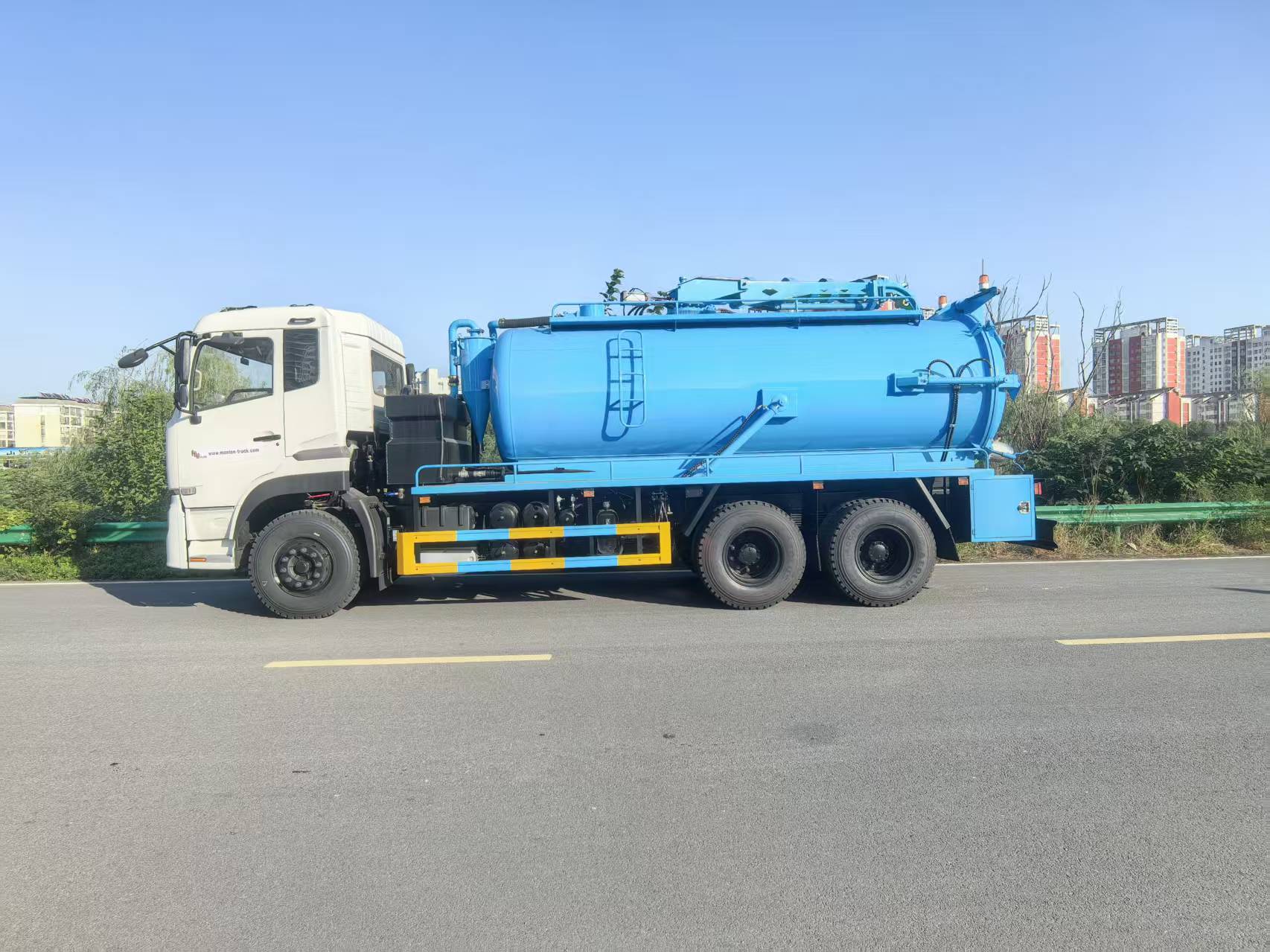
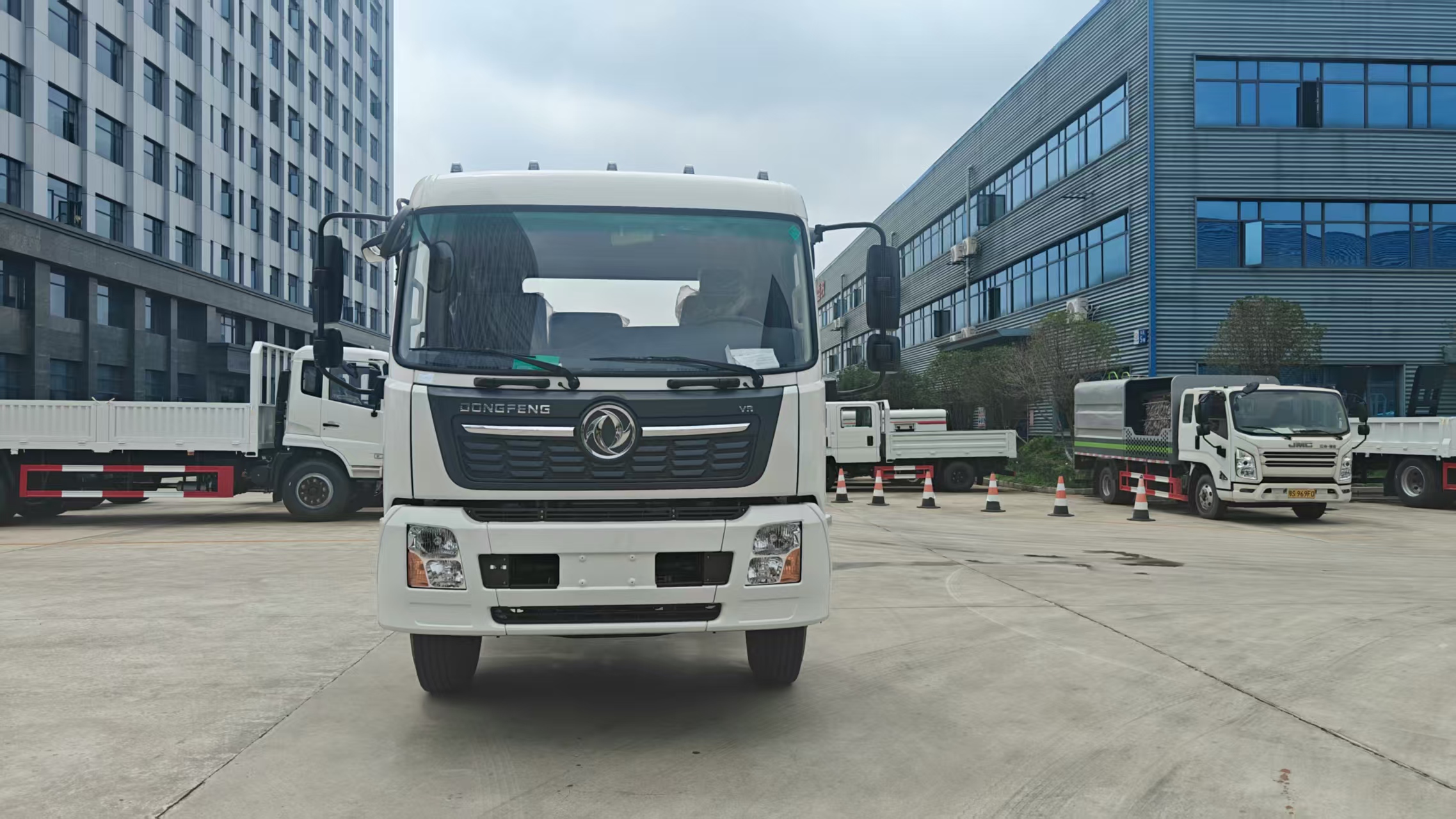
A 20 m3 vacuum sewage truck is usually chosen for collection routes where a small septic-service truck would spend too much of the day travelling to discharge. This documented Dongfeng Tianlong 6×4 configuration is a straightforward, high-volume vacuum truck: it collects wet sewage, sludge and slurry, carries the load in a sealed tank, then gives the operator more than one way to unload it.
The point is not to make a 20 m3 truck sound suitable for every job. It is a reference for buyers who need a larger wet-waste collection unit and want to understand the chassis, tank, liquid ring vacuum system and unloading arrangement before they request a quotation.
What this 20 m3 vacuum truck is designed to do
This is a vacuum sewage truck, not a combined jetting and suction truck. There is no high-pressure pipe-cleaning system in this reference. Its main job is to draw in wet material, transport it safely and discharge it at the appropriate point.
That makes it a practical format for municipal sanitation work, wastewater and sludge collection, and industrial sites where the collected material is compatible with the tank and vacuum system. The exact waste medium still matters. Buyers handling corrosive chemicals, unusually abrasive material or a large amount of dry solid matter should describe that material before the tank and pump are confirmed.
Reference configuration at a glance
| Item | Documented reference |
|---|---|
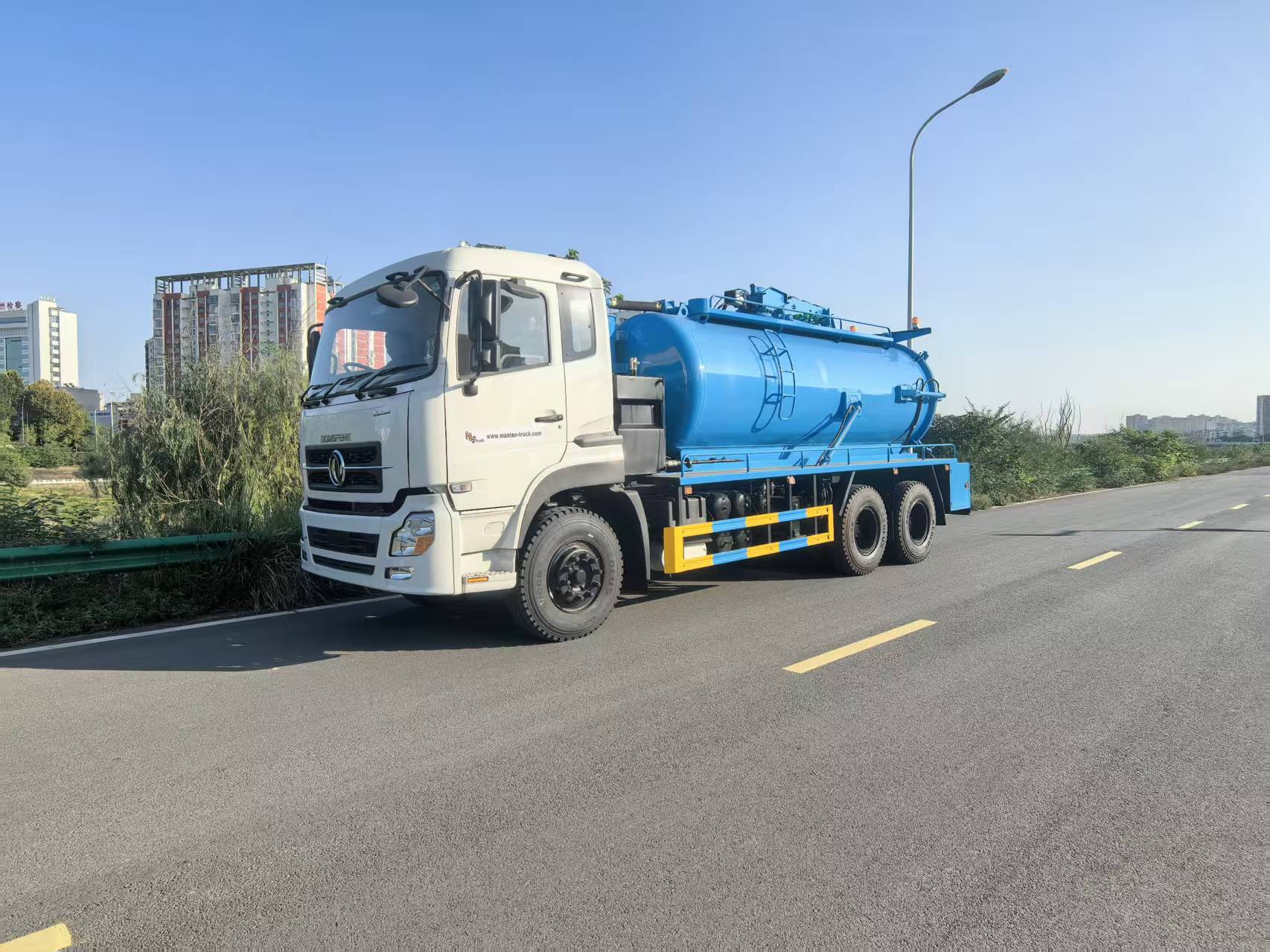
| Chassis | Dongfeng Tianlong 6×4, D310 cab |
| Wheelbase | 4,350 + 1,350 mm |
| Reference engine | ISD270 50, 270 PS, Euro V diesel |
| Gross vehicle weight | 25,000 kg |
| Tank capacity | 20 m3 |
| Tank material | Q235B mild steel, 6 mm tank body and end caps |
| Vacuum pump | 2BE-204 liquid ring vacuum pump |
| Reference airflow | 1,250 m3/h |
| Stated ultimate vacuum | -0.098 MPa |
| Reference suction reach | At least 9 m vertical lift and 50 m horizontal distance under suitable conditions |
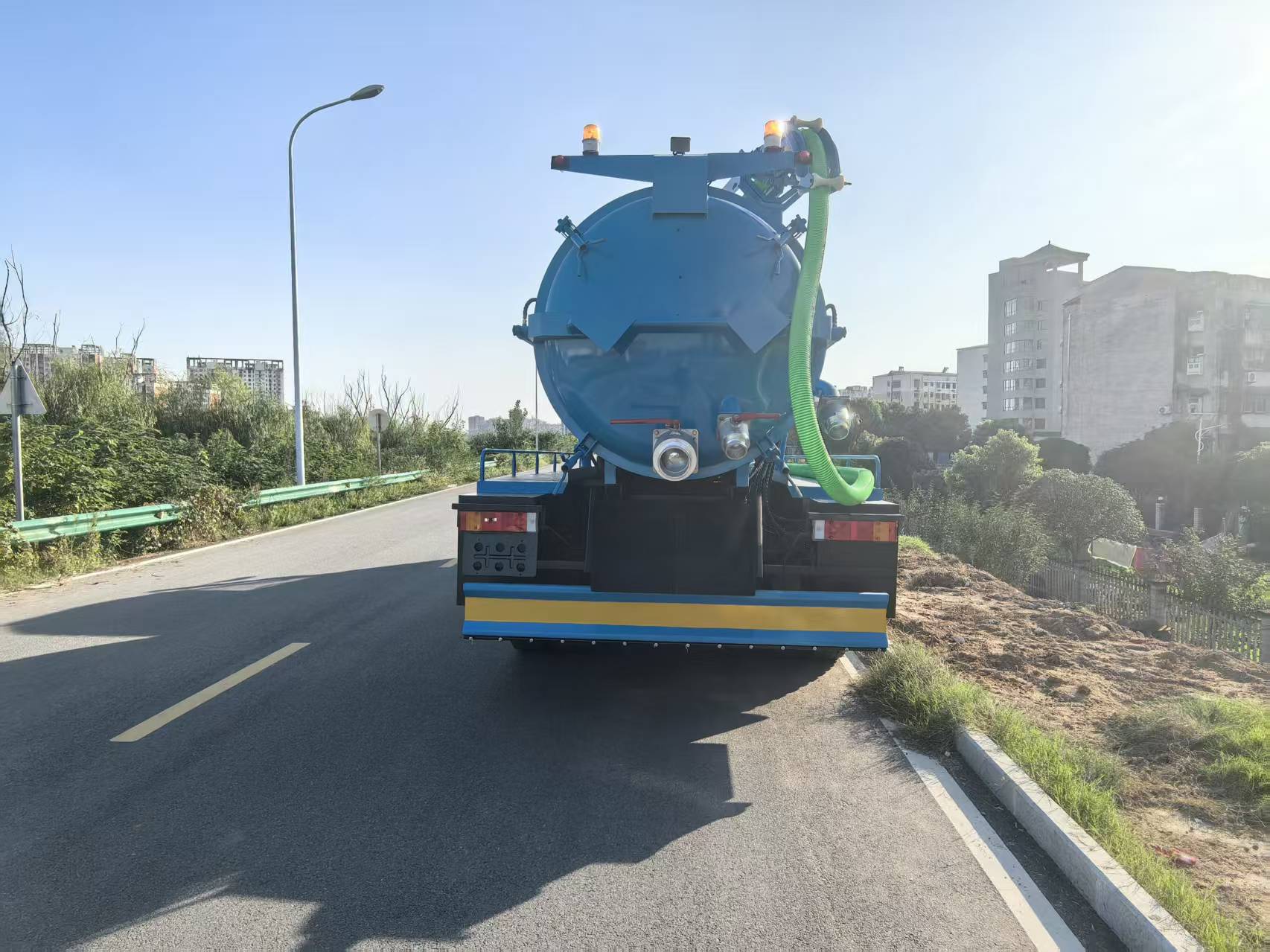
| Rear discharge arrangement | Hydraulic tipping, hydraulic rear door and DN150 bottom ball valve |
The final chassis and emissions package should be checked against the destination market. The figures above describe the supplied vehicle reference; they are not a promise that every exported unit will be built in exactly the same form.
Why the 2BE liquid ring vacuum pump matters
The vacuum system uses a 2BE-204 liquid ring pump. It is specified to work with clean water as its working medium and is paired with DN100 suction and discharge ports. For a wet collection truck, this is a meaningful distinction: the pump arrangement, water supply and day-to-day maintenance routine all need to suit the work instead of being treated as an afterthought.
The supplied reference lists 1,250 m3/h airflow and a stated ultimate vacuum of -0.098 MPa. On site, suction speed changes with hose size, lift, hose routing, the tank level and the material being collected. A long run with thick sludge is not the same job as drawing thin wastewater from a shallow pit.
The protection path is just as important as the pump itself. This truck uses a primary float-ball anti-overflow valve and a secondary cyclone separator before the vacuum pump. Positive and negative pressure safety valves, together with an overflow alarm, help protect the tank and pump when the operator is close to a full load.
Three ways to discharge the load
A useful part of this configuration is that it does not rely on gravity alone. The vehicle has three documented discharge methods:
- Hydraulic tipping with the rear door open: useful where heavier sludge or residue needs the tank to be raised for unloading.
- Pneumatic pressurized discharge: intended to assist with high-viscosity material that does not flow out easily by gravity.
- DN150 bottom ball-valve drainage: a quicker route for thinner wastewater or dilute liquid where tank lifting is unnecessary.
The tank lifting angle is specified at up to 50 degrees and the rear door at up to 60 degrees. A manual mechanical locking arrangement is included as part of the lifting safety design. Whether pressurized discharge is suitable for a particular material should be confirmed before ordering.
Tank construction and operator details
The 20 m3 cylindrical tank uses internal anti-sloshing baffles, internal stiffeners and external reinforcement hoops. These are practical details on a larger tank because they help manage liquid movement during transport. The reference also includes a liquid-level sight window, pressure gauge, liquid-level sensor, low-level alarm and a 20 L hand-washing tank.
The documented corrosion-protection package combines electrophoresis treatment with epoxy coating. It is presented as an option suited to hot or salt-fog environments, but the real decision should follow the material being collected and the buyer's local operating conditions.
Optional hydraulic suction boom
The hydraulic suction boom in the document is optional, rather than part of the standard truck description. It uses a two-stage Q355 steel telescopic structure with a stated 270-degree horizontal rotation range and a DN100 suction pipe. The listed working radius is 1,400-2,700 mm, with a supporting hose that can be extended from 10 m to 20 m.
For frequent manhole or pit work, a boom can reduce manual hose handling. For general collection routes, a conventional hose arrangement may be sufficient. It should be specified from the actual working method, not simply added to a list of options.
Who should consider this configuration?
This 20 m3 configuration can make sense for operators whose daily work involves larger volumes of sewage, sludge or slurry and who have enough road access for a 6×4 truck. It is a better fit for longer municipal or industrial collection routes than a compact vacuum truck that has to discharge several times a day.
It is not automatically the right choice for every buyer. A smaller truck may be easier to use on narrow streets, while a combined jetting and vacuum truck is more appropriate when pipe cleaning is part of the same job. See the Sewage Suction / Vacuum Truck product family and our vacuum truck tank-capacity guide for the wider choice.
Information to confirm before quotation
Before a final configuration is proposed, the buyer should confirm:
- The material to be collected and its approximate viscosity
- Typical suction depth and hose distance
- Whether discharge will be by tipping, pressure or bottom drainage
- Daily collection volume and disposal-site arrangement
- Destination-country emissions, axle-load and safety requirements
- Whether a hydraulic suction boom is genuinely needed
For a different example of a heavy-duty vacuum configuration, see our 20 m3 heavy-duty vacuum suction truck buyer guide. Send the working details to CLW Group and we can check whether a 20 m3 6×4 layout is suitable.
Frequently asked questions
Is this truck also used for high-pressure sewer jetting?
No. This documented vehicle is a vacuum sewage truck for suction, transport and discharge. Buyers who need high-pressure cleaning and vacuum recovery on the same visit should look at a combined jetting and vacuum truck instead.
Why choose a liquid ring vacuum pump?
This reference uses a 2BE-204 liquid ring pump with clean water as its working medium. It is one possible arrangement for wet-waste collection work. The correct pump depends on the material, required duty cycle, service support and operating conditions.
Can the hydraulic suction boom be added later?
The boom is listed as optional. Its suitability should be confirmed with the tank layout and real operating method before production, rather than assumed after the truck has been built.