When a sewer line is blocked, wastewater is backing up or a drainage area needs to be cleared quickly, the first question is rarely, "What is the biggest truck available?" The more useful question is whether the equipment can reach the location, clear the line, recover the material and get the service route moving again.
That is how we approach an emergency municipal vacuum and jetting truck at the factory. A truck has to be selected around the actual response job: the road it must enter, the pipe it must clean, the material it must recover and the number of hours the crew must work before they can refill water or discharge the tank.
This guide is about planning for urgent sewer-maintenance work. It is not tied to a particular event or location, and it is not a promise that one heavy-duty configuration fits every municipality.
What makes a sewer-maintenance job urgent
Municipal teams and contractors do not need an emergency sewer cleaning truck only after an extreme event. Urgent work can be as ordinary as a blocked trunk line near homes, a drainage pit overflowing after heavy rain, a construction site with slurry entering a drain, or a sewage pump station that needs immediate cleaning.
In those situations, the crew usually has to do two things at once. First, use high-pressure water to loosen, flush or move the blockage. Then recover the wastewater, sludge, sediment and debris before it causes a second problem downstream. Sending separate equipment for each part can work, but it takes more time and more coordination when access is already difficult.
That is where a municipal vacuum jetting truck has a real advantage. It combines the cleaning and recovery functions on one working platform. The configuration still needs to suit the route; a large truck that cannot reach the manhole does not solve an urgent problem.
Start with access, not horsepower
When a buyer asks us for a heavy-duty truck, we first ask where it will have to work. A narrow residential street, a treatment-plant yard, a rural drainage channel and an industrial site may all need sewer cleaning, but they do not need the same chassis.
A smaller 4×2 or 6×4 combined truck may be the practical choice for frequent urban callouts, where turning space, parking and running cost matter every day. A heavier multi-axle configuration becomes more useful when the work includes longer service routes, higher recovery volume, difficult ground or industrial-scale cleaning duty.
For sites with poor road access, soft ground or remote drainage work, traction and chassis layout deserve as much attention as tank capacity. The truck must be able to arrive safely, not just carry a large number in the quotation.
The four systems that decide whether the truck will help
1. A jetting system matched to the pipe-cleaning job
Pressure alone does not tell the whole story. Pressure helps a nozzle work against a blockage, while water flow helps move loosened material along the pipe. The right balance depends on the pipe diameter, the type of blockage, the hose distance and how often the crew will work during a shift.
For a light urban cleaning route, an oversized water system can add cost without improving the result. For a long run or recurring blockage, insufficient flow can make the crew spend too much time on one location. The pump, reel, hose diameter and nozzle package should be selected together.
See How Pressure and Flow Affect a Sewer Cleaning Truck for the practical difference between these two figures.
2. Enough clean water and recovered-material capacity
A combined truck must carry water for cleaning and leave room for what comes back from the line. That balance matters more during urgent work because stopping to refill or discharge too early interrupts the response.
There is no fixed tank split that works for every fleet. A crew clearing a long pipe run may need more clean water. A team recovering a large amount of sludge or wastewater may need more waste capacity. Local axle-load rules and material density can also limit the useful working volume long before the tank reaches its headline capacity.
For this reason, we normally ask about the expected material, the normal disposal distance and the likely number of cleaning runs in one shift before recommending the tank arrangement. The vacuum truck tank capacity guide explains the same decision in more detail.
3. A recovery system that suits the material and hose route
Recovering ordinary wastewater from a nearby manhole is different from lifting thick sludge, sand-bearing slurry or industrial sediment through a long hose. Vacuum-pump capacity is important, but it is only one part of the working result.
The actual suction performance changes with hose diameter, hose length, vertical lift, bends in the line, material density and the condition of filters and safety devices. A useful emergency configuration therefore includes the right hose size, overflow protection, valves and a discharge arrangement that the operator can use safely at the end of the job.
Our vacuum pump selection guide covers the questions that should be answered before a pump is specified.
4. Controls and protection that crews can use under pressure
During urgent work, operators should not have to work around complicated or fragile controls. Clear level indication, emergency stops, protected electrical equipment, practical hose-reel control and properly selected pressure and vacuum relief devices are all part of the working vehicle.
The same is true of corrosion protection. For municipal sewage, sludge and normal drainage work, a protected carbon-steel tank may be a practical direction. For saline, acidic or chemically aggressive material, the tank material, coating, fittings and seals need to be considered separately. A fast response does not remove the need to choose materials that can survive the medium being handled.
When a heavy-duty configuration is the right tool
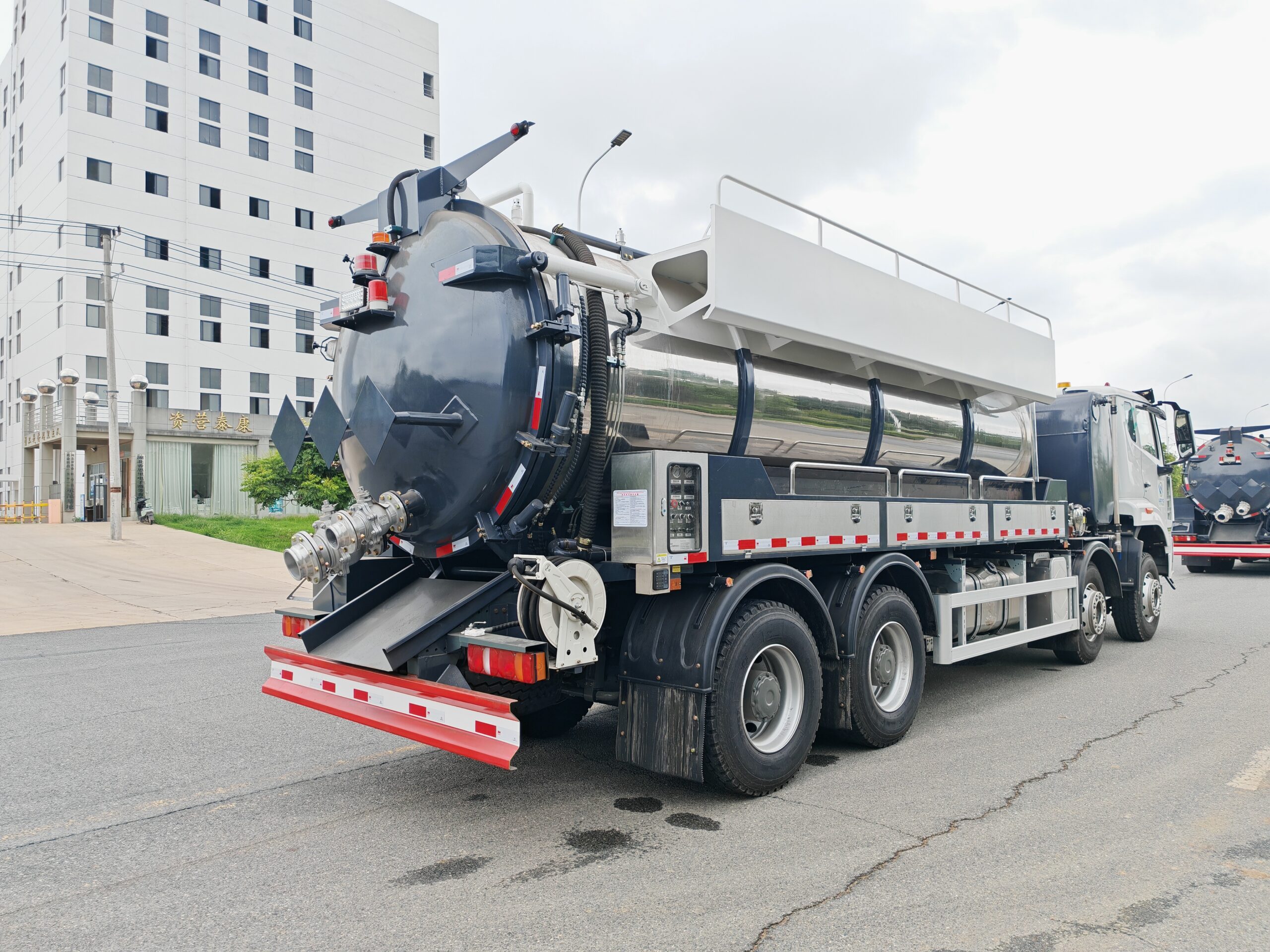
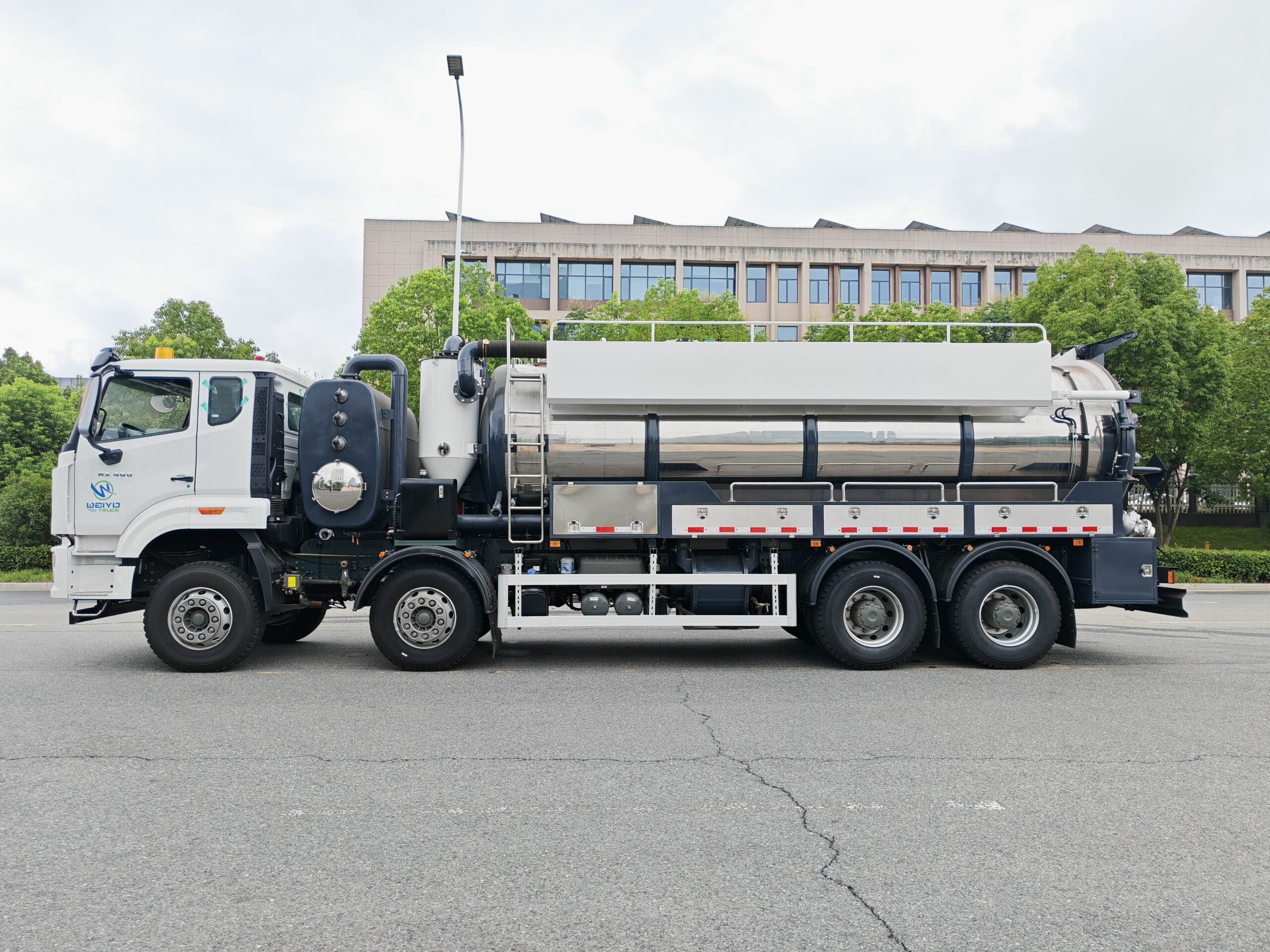
A heavy-duty vacuum jetting truck starts to make sense when the operating problem is bigger than a short blockage on a paved street. It can be the right direction for a contractor or municipal fleet dealing with longer cleaning routes, industrial pits, larger sewer mains, drainage channels or frequent heavy recovery work.
The advantage is not simply a bigger tank. It is the ability to carry a more capable water system, stronger recovery equipment, longer hoses and a chassis selected for the loaded working cycle. Some configurations can also support independent or simultaneous vacuum and jetting work, which helps the crew keep cleaning while recovered material is being managed.
The real trade-off is access and operating cost. A larger chassis needs more turning space, has higher axle loads and can be less convenient for densely built urban areas. That is why many fleets use more than one size of equipment rather than trying to make one truck cover every callout.
A simple factory checklist before an urgent-work truck is ordered
The useful information is usually straightforward. Before a configuration is confirmed, we ask buyers to share:
- The usual emergency work: blocked sewer lines, drainage pits, pump stations, industrial wastewater, construction slurry or another task.
- The access route: road width, turning restrictions, ground condition, slope and the distance between the truck and the working point.
- The pipe-cleaning requirement: common pipe sizes, longest hose run, likely blockage type and expected nozzle use.
- The material to recover: wastewater, sludge, sand, slurry or mixed material, including whether corrosion or abrasion is a concern.
- The working cycle: water use per shift, expected recovered volume, disposal location and time available before the truck must return to service.
- The destination requirements: chassis preference, drive side, emissions rules, language markings, climate and local service support.
These answers help prevent a common mistake: specifying a heavy-duty truck by tank size alone, then discovering that the hose, water system, access or discharge arrangement does not match the route.
A response vehicle should make the next job easier
The best municipal response truck is not necessarily the largest or most expensive truck in the fleet. It is the one that can reach the problem, clear it safely, recover the material and return to the next job with as little lost time as possible.
For some buyers, that will be a compact combined truck. For others, especially those handling long cleaning runs, larger recovery volumes or more difficult access, a heavy-duty vacuum jetting truck is the sensible choice. The factory's role is to turn the working conditions into a practical combination of chassis, tank, pumps, hoses, controls and protection.
For heavier configuration directions, see Heavy-Duty Vacuum & Jetting Truck. For a smaller combined reference, see Combination Jetting and Vacuum Truck.
Frequently Asked Questions
Is an emergency sewer cleaning truck different from a normal combined truck?
Not always. The same type of combined vacuum and jetting equipment can be used for planned maintenance and urgent work. The difference is whether the configuration has enough access capability, water, recovery capacity, hose reach and reliable controls for the fleet's response tasks.
Does a municipality always need a heavy-duty 8×4 truck for urgent sewer work?
No. Heavy equipment is useful for larger routes, higher recovery volumes and more demanding ground or industrial work. A smaller truck can be more effective for narrow streets and routine urban callouts.
Can one truck both flush a blocked line and recover the wastewater?
Yes, a combined vacuum and jetting truck is designed to support both functions. The final pump, hose-reel and tank arrangement should be selected around the actual cleaning and recovery duty.
What should be checked for corrosive or industrial wastewater?
Confirm the material, temperature, corrosiveness and solids content before choosing the tank, coating, valves, seals and filtration arrangement. Standard carbon-steel equipment should not be assumed suitable for every industrial liquid.
What should a buyer send to the factory for a recommendation?
Send the work type, pipe sizes, normal hose distance, access conditions, material to be recovered, expected daily volume and destination market to CLW Group.