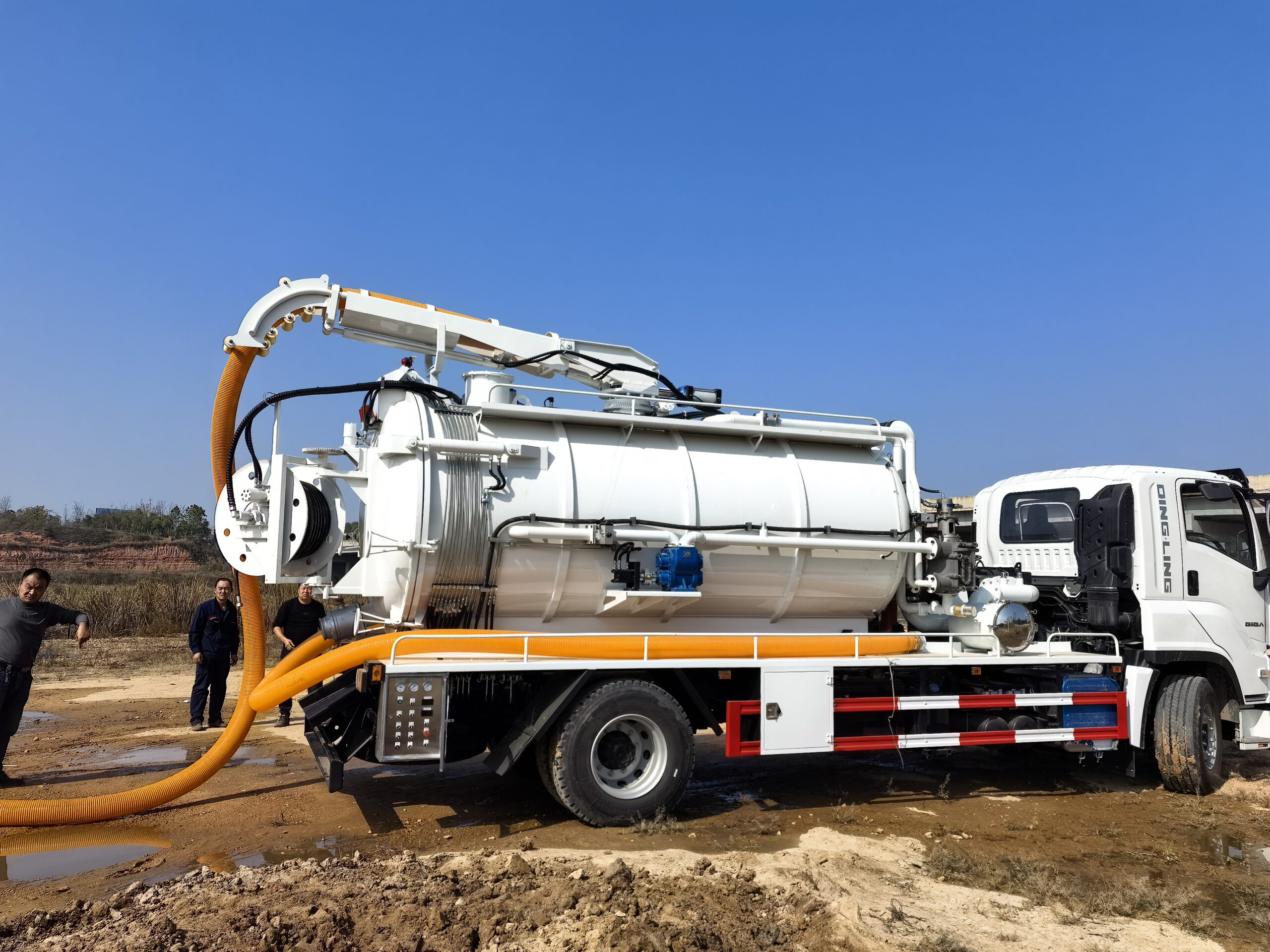
An OMEGA wastewater circulation system is used on a combination jetting and vacuum truck that needs to recover wastewater, circulate water into the clean-water side and carry out high-pressure cleaning work on the same vehicle. It is relevant for sewer-cleaning crews that need vacuum recovery and jetting functions to work as one operating system rather than as separate vehicles.
This guide is based on a supplied operating instruction for an OMEGA-equipped truck and original reference images. The images show more than one chassis and capacity arrangement, including a single-axle 11 m3 reference truck and a rear tandem-axle reference truck. They should not be read as one fixed universal specification. Final capacity, chassis, tank split, pump package and local compliance requirements must be confirmed for the exact vehicle.
Important: The supplied operating instruction explains operating conditions and sequences. It does not state the filtration stages, water-quality standard, circulation flow or continuous working time. Buyers should request the approved OMEGA system drawing and applicable water-quality details before confirming a configuration for a regulated application.
What an OMEGA wastewater circulation system adds to a combination truck
A standard combination jetting and vacuum truck combines vacuum recovery with high-pressure water jetting. The OMEGA-equipped arrangement documented here adds a wastewater circulation function between those working systems.
In practical terms, the crew can use the vehicle for three linked functions:
- Vacuum collection of wastewater, sludge and similar material through the suction system
- Operation of the wastewater circulation system while the vacuum system is running and its working conditions are met
- High-pressure cleaning through the jetting hose and reel
The operating instruction requires the vacuum pump to remain in operation while the wastewater circulation system is working. It also instructs the operator to observe the arc gear pump, the OMEGA circulation system and water entering the clean-water tank. This makes the circulation function part of a controlled working sequence, not a switch that should be operated independently of the vacuum system.
Conditions to check before starting wastewater circulation
Before the OMEGA wastewater circulation system is switched on, the supplied instruction requires the following conditions:
| Check | Documented requirement |
|---|---|
| Vacuum function | The suction function must be operating normally. |
| Tank water level | The water level inside the suction tank must be above the second sight glass. |
| Tank pressure | Negative pressure must not be lower than -0.03 MPa; positive pressure must not exceed 0.1 MPa. |
| Electrical control | The vehicle and electrical control-box power switches must be on. |
These values are operating requirements for the supplied reference system. They must not be copied to another truck, tank or control system without checking that vehicle's approved operating manual.
Documented OMEGA operating sequence
Once the above conditions are met, the instruction describes the following sequence:
- Confirm that the electrical control-box power is on.
- Turn on the wastewater circulation system.
- Check that the arc gear pump and the OMEGA circulation system are operating normally.
- Observe whether water is entering the clean-water tank.
- When the clean-water tank reaches its safe level and the overflow alarm sounds, turn off the wastewater circulation system.
This sequence is useful to a buyer because it identifies the equipment and monitoring points that should be visible in the final control and pipework layout. It does not replace operator training or the delivery manual for the exact truck.
Vacuum, circulation and high-pressure cleaning: how the functions work together
The OMEGA circulation system is not the same function as high-pressure cleaning. Vacuum recovery first creates the required operating condition for circulation. The high-pressure system then provides the cleaning action through the hose, reel and selected nozzle.
For high-pressure cleaning, the supplied instruction says to start with the vehicle and electrical controls on, engage the parking PTO and high-pressure PTO, keep the throttle low initially, place the high-pressure hose in a safe position and then open the high-pressure water switch. It specifies that the high-pressure gauge must not exceed 20 MPa.
For combined operation, the instruction calls for the negative-pressure PTO, parking PTO and high-pressure PTO to be engaged at the specified combined-working setting, followed by the wastewater circulation switch and high-pressure water switch. Gear selection and control settings are specific to the supplied vehicle. They should always be confirmed by the final truck manual and operator training before use.
For a broader explanation of selecting a jetting package, see Jetting Pump Pressure and Flow for a Sewer Cleaning Truck. For the vacuum side of the truck, see How to Choose a Vacuum Pump for a Sewage Suction Truck.
Reference configurations shown in the supplied images
The images accompanying this guide show why the OMEGA system should be discussed as a configuration, not as one fixed truck model.
Single-axle 11 m3 reference truck
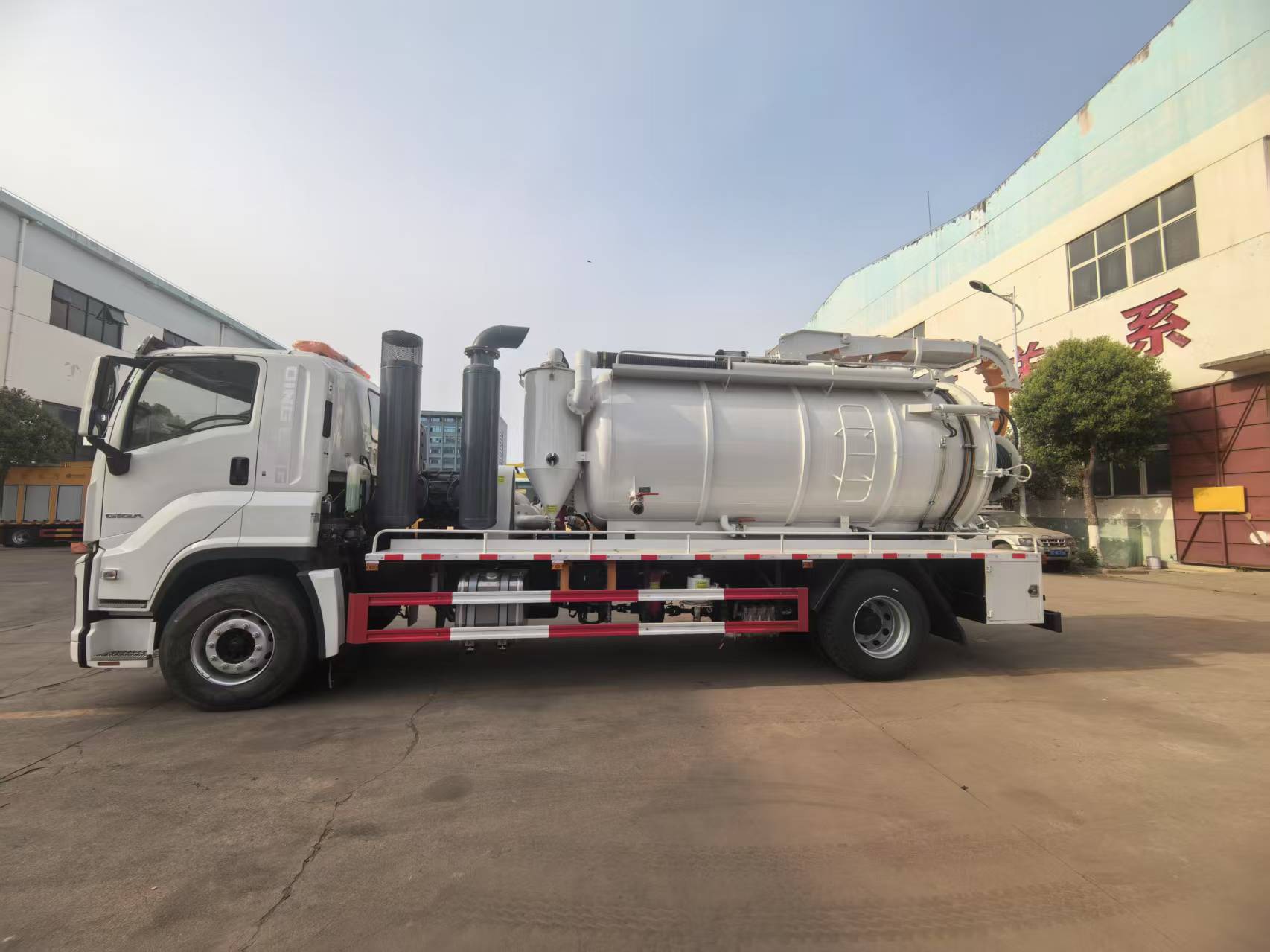
One supplied image is identified as a single-axle 11 m3 Isuzu cleaning and suction truck with an OMEGA wastewater circulation system. This size can be a useful reference when route access, vehicle length and a medium working capacity matter. The final usable tank arrangement still needs to be matched to the expected recovery volume and water demand.
Rear tandem-axle reference truck
Other supplied images show a larger rear tandem-axle Isuzu reference configuration. A heavier chassis can provide more room for the tank body, hose equipment and system layout, but a buyer must still check legal axle loading, turning access, emissions, drive side and maintenance support in the destination market.
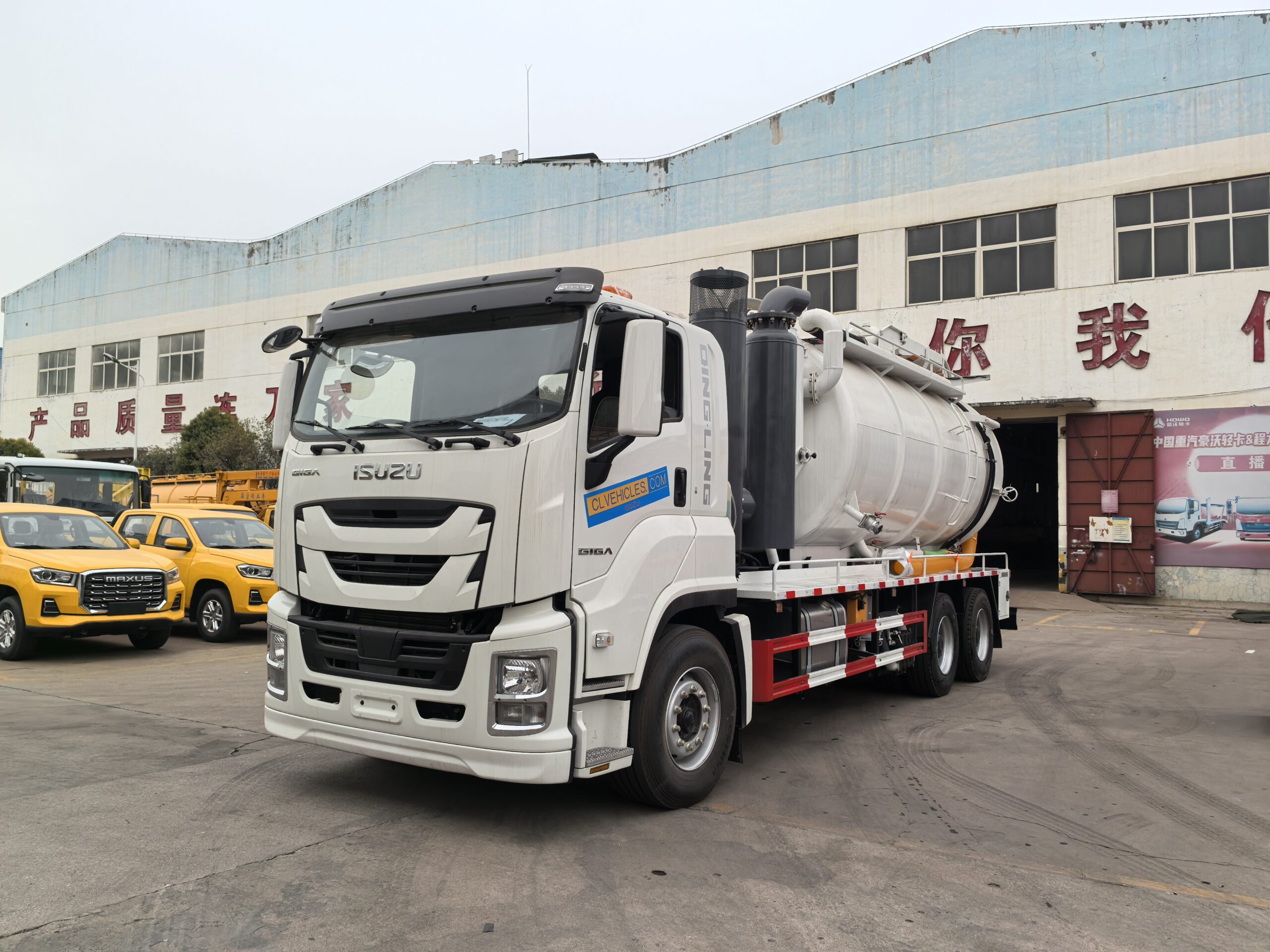
The two reference configurations should not be compared only by tank size. The working material, pipe condition, jetting water demand, disposal route and local road restrictions all affect the correct choice.
Questions to confirm before ordering an OMEGA-equipped truck
Before final quotation or production approval, provide the following information:
- The normal material to be recovered, including its solids content and whether it is abrasive, oily, corrosive or mixed with debris
- The pipe-cleaning task, including pipe diameter, blockage condition, normal hose run and required pressure/flow range
- Required vacuum recovery capacity and expected daily disposal cycles
- Whether the application has any required water-quality, treatment-stage or discharge standard for the circulation function
- Preferred chassis, drive side, emission requirement, climate and destination market
- Required tank material, corrosion protection, hose-reel arrangement and operating controls
This information helps define whether a single-axle reference configuration or a rear tandem-axle configuration is more appropriate, and it prevents the OMEGA system from being specified without the supporting vacuum, jetting and tank layout.
For other combined configurations, visit Combination Jetting and Vacuum Truck. For a heavy-duty solution, see Heavy-Duty Vacuum & Jetting Truck. To discuss a project, contact CLW Group.
Frequently Asked Questions
Does an OMEGA wastewater circulation system replace the vacuum pump?
No. In the supplied operating instruction, the vacuum pump must be working when the wastewater circulation system is operating. The two systems are designed to work together.
Can the circulation system operate when the suction tank water level is low?
Not according to the supplied instruction. The tank water level must be above the second sight glass before starting the wastewater circulation system.
What happens when the clean-water tank is full?
The instruction states that an overflow alarm will alert the operator when the clean-water tank reaches its safe level. The wastewater circulation system should then be turned off.
Is every OMEGA-equipped combination truck an 11 m3 model?
No. The supplied images include a single-axle 11 m3 reference truck and a separate rear tandem-axle reference configuration. Capacity and chassis must be selected for the specific working task and destination-market limits.
Can the high-pressure cleaning system run at any pressure?
No. The supplied instruction states that the high-pressure gauge must not exceed 20 MPa. Final operating limits must follow the manual and training provided for the exact vehicle.
For an OMEGA system configuration recommendation, send the application, expected material, required capacity, pipe conditions and destination market to CLW Group.